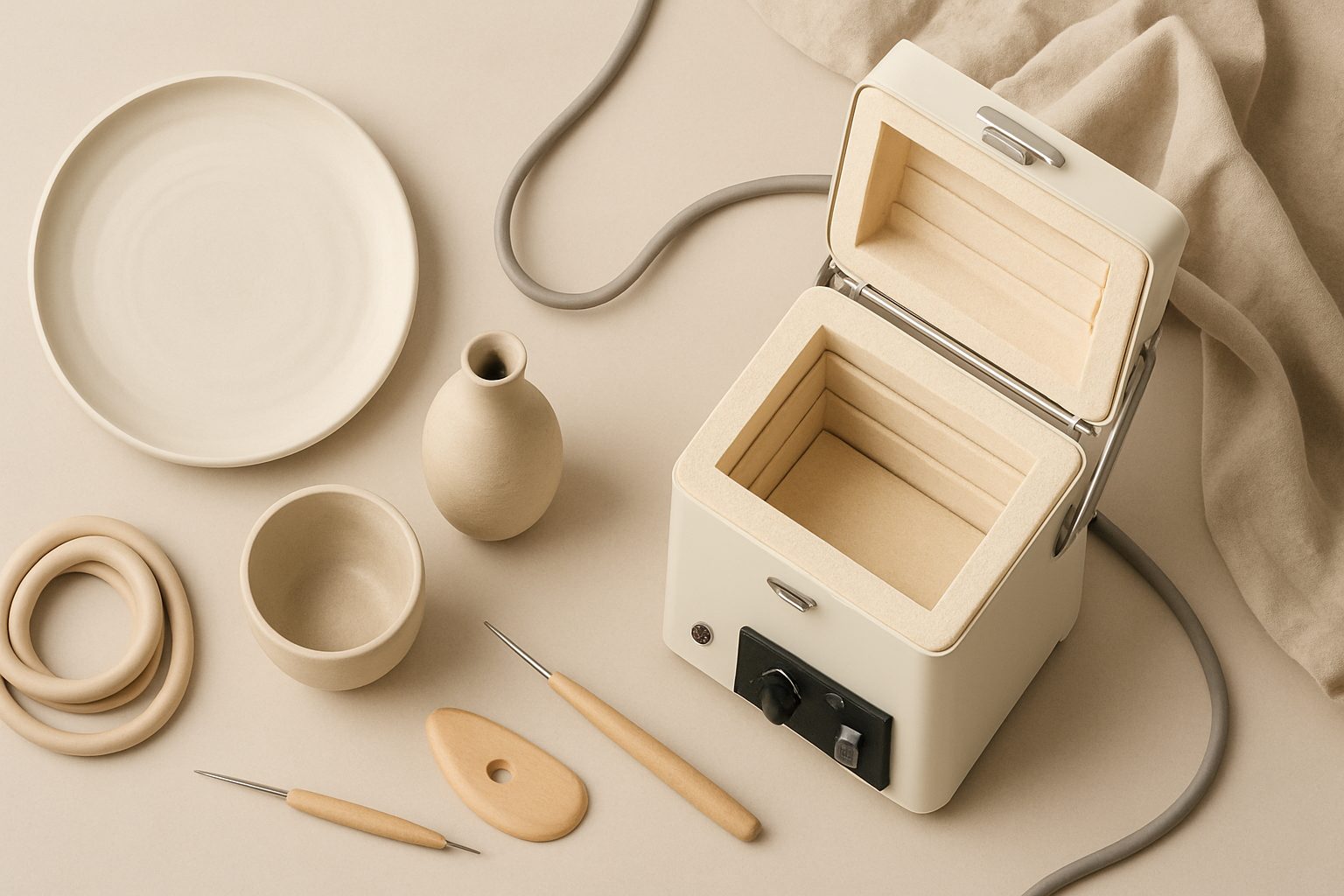
Best Electric Pottery Kilns Under £500 UK — Budget Buys That Actually Work
Finding a decent electric pottery kiln under £500 is genuinely achievable in the UK, but you need to know where to look and what compromises you're actually making. A new kiln at this price point will have limitations—smaller chamber, slower firing, basic controls—but entry-level models from Rohde and Kilncare can fire functional work, and the secondhand market offers real value if you're willing to inspect before buying.
What You Can Realistically Expect Under £500
A sub-£500 electric kiln will almost certainly be bench-top or small floor-standing, likely a Cone 06–Cone 6 model (reaching around 1000–1200°C). Chamber sizes typically max out at 30–40 litres. Heating elements are usually nichrome wire, not ceramic fibre, which means slower heat-up times and longer firing cycles—sometimes 8–12 hours to reach temperature. Temperature control is often manual or basic digital, not programmable, so you're setting it by eye or experience. Kiln furniture (shelves, stilts, plugs) usually isn't included and will add £50–£100 to your real startup cost.
The trade-off is straightforward: you lose speed, even heating, and the ability to fire delicate glaze work, but you gain a working kiln that fires stoneware, earthenware, and many glazes perfectly well.
Best New Models Under £500
Rohde Entry-Level Models (£350–£480)
Rohde kilns dominate the budget sector in the UK for good reason. Their entry-level bench-top models—typically around 30–35 litres—are sturdy, simple, and repair-friendly. Expect manual temperature control via a dial or basic analogue gauge. Build quality is honest: steel shell, firebrick interior, standard elements. They fire reliably but slowly (10–12 hours isn't unusual). Rohde doesn't overload budget models with features, which keeps the price down and reliability up. You're buying a tool, not a status symbol, and that's the entire point.
Value score: 7/10 — solid workhorse, no surprises, well under budget.
Kilncare Compact Series (£420–£500)
Kilncare's compact electric kilns are the next reliable option. These are slightly smaller—usually 25–30 litres—with similar manual or basic digital controls. The key difference is they tend to reach temperature a bit faster (8–10 hours) due to higher element density. They're common in UK hobby studios and school art departments, which means parts and repair advice are easy to find. Chamber height is a limitation if you're throwing tall pots; these kilns suit slab-built work, jewellery-scale pieces, and small thrown forms better.
Value score: 7.5/10 — slightly faster firing, good parts availability, tight chamber space.
The Secondhand Market (Often Better Value)
This is where you can get real advantage. A five-year-old kiln that cost £700 new often sells for £250–£400, depending on condition and element life. Check for cracking in the firebrick (minor cracks are normal; structural cracks are a deal-breaker), test the elements visually and electrically, and ask about firing history—a kiln that's been fired 100 times will behave differently from one fired 1000 times.
Buying secondhand is most sensible with:
- Rohde kilns (parts are cheap and widely available)
- Kilncare models (same reason)
- Established brands like Crescent or Cromartie (if you can find them; older UK brands, well-designed, repairs are straightforward)
Avoid anything with a cracked element tube (the ceramic tube that holds the wire), corroded electrical connections, or missing control switches. A replacement element costs £80–£150, so factor that into your offer. Always ask to see it in operation if possible.
Value score for solid secondhand: 8–9/10 — typically superior value, but inspect carefully.
What to Avoid Under £500
Stay away from unbranded online kiln kits shipped from abroad. They're tempting at £300–£400, but import duty, no UK support, and wildly inconsistent element quality make them a false economy. You'll likely spend £100+ on repairs or replacements within the first year.
Also skip any model marketed as "cone 10 and beyond" for under £500—the maths doesn't work. Reaching Cone 10 (1300°C) requires better insulation and elements than budget models offer.
Running Costs and Setup Reality
Budget kilns use roughly 2–3 kW per firing cycle. At current UK electricity rates, expect 50p–£1 per firing. Shelf costs, element replacement every 300–500 firings, and kiln wash (which you'll need) add ongoing expense. None of this is hidden; just factor it in.
Making Your Choice: A Value Metric
Use this simple scoring system for any kiln you're considering:
- Price (lower is better): 10 points
- Chamber size (larger is better): 8 points
- Firing speed (faster is better): 6 points
- Element life (longer is better): 7 points
- Parts availability (easier is better): 9 points
A new Rohde typically scores 35/40. A well-chosen secondhand Rohde scores 38/40 at half the price.
Final Thoughts
Under £500, you're not buying a precision instrument—you're buying a tool that fires. New Rohde and Kilncare models are reliable and straightforward. The secondhand market can offer better value, provided you inspect honestly. Either way, once you're past the initial price, budget for kiln furniture, elements, and electricity. A working kiln under £500 is realistic; building a sustainable pottery practice around it takes modest ongoing investment, but that investment is genuinely modest by any studio standard.
For guidance on buying secondhand, see guides covering inspection checklists and negotiation.
More options
- Electric Pottery Kilns (Top-Loaders & Front-Loaders) (Amazon UK)
- Tabletop & Small Ceramic Kilns (Amazon UK)
- Kiln Furniture & Shelves (Amazon UK)
- Pyrometric Cones & Kiln Temperature Accessories (Amazon UK)
- Kiln Vent & Ventilation Systems (Amazon UK)