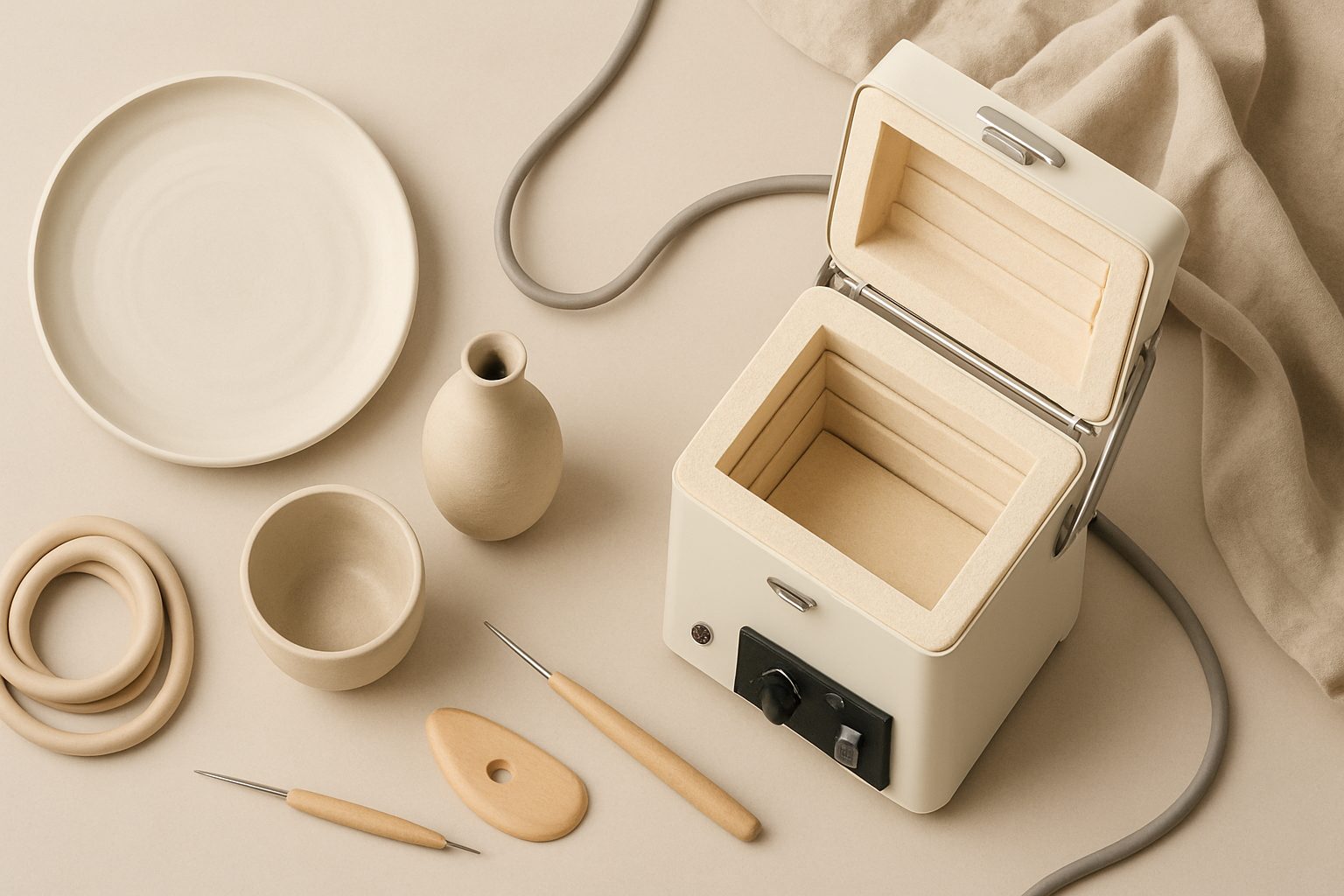
Best Raku Kilns for Home Use UK: Gas & Electric Options Reviewed
Raku firing is increasingly popular with UK pottery hobbyists and small-scale makers, but choosing between gas and electric kilns—and figuring out whether your space and budget actually suit the process—requires honest evaluation. Both have genuine trade-offs that aren't always obvious from supplier brochures.
What Makes Raku Different
Raku kilns fire to a lower temperature (around 1000–1200°C) than traditional stoneware or porcelain kilns, and the rapid cooling creates those characteristic crackle glazes and metallic finishes. The real practical difference for home potters is that you're removing hot ware from the kiln and reducing it in combustible materials—sawdust, leaves, or paper—while it's still glowing. This isn't just a firing technique; it's a safety event that demands dedicated outdoor space and proper precautions.
Portable Propane Raku Kilns
Gas-fired propane raku kilns dominate the home market because they're mobile, reach temperature quickly (often 60–90 minutes from cold), and give you genuine control over heating rates. A typical portable unit weighs 40–80 kg and fits in a garden shed or studio corner.
Strengths: Fast firing means you can complete a raku session in an afternoon. Propane costs roughly £15–25 per firing depending on kiln size and how long you hold temperature. You can fire smaller batches whenever inspiration strikes, rather than waiting for the kiln to cool. They're straightforward to operate once you understand the burner controls.
Weaknesses: Propane bottles take up space and need monthly safety checks. Uneven heating is common with cheaper models—one side of your ware fires hotter than the other. You'll hear consistent noise from the burner; neighbours in terraced houses often object. Portable units typically have poor insulation, so fuel consumption rises in winter. Most critically, you're working with an open flame around combustible materials during reduction, which is inherently riskier than other firing methods.
Popular UK suppliers stock propane raku kilns in the £800–2,500 range depending on internal dimensions (roughly 30–50 cm wide). Smaller, lighter models suit tight spaces; larger ones fire more pots per session but need genuinely robust outdoor space.
Electric Raku Kilns
Electric raku units are less common in the UK but growing steadily. They fire slower—typically 3–4 hours to temperature—but offer precision and quieter operation.
Strengths: No flame, no fuel bottles, no burner maintenance. Temperature is remarkably even across the kiln. You can leave an electric kiln unattended during firing without anxiety. Electricity costs roughly £2–4 per firing (cheaper per use than propane). Quieter operation makes them neighbourly. They're safer to live alongside because there's no open flame.
Weaknesses: They still require outdoor space for reduction. You're pulling hot ware out of an electric kiln and reducing it in sawdust just as much as with a gas kiln—the reduction phase is where the actual safety risk lives, not the firing method. Slower firing means you can't fit raku sessions into short studio windows. Larger models need a dedicated 16-amp or 32-amp circuit, which may require electrician work costing £500+. Electric kilns are less portable; you're committing them to a permanent outdoor spot. They also take longer to cool, tying up space.
Electric raku kilns typically cost £1,200–3,500 depending on size.
Safety Gear and Outdoor Setup
Regardless of kiln type, proper reduction requires:
- Heavy leather or welding-grade gloves (not standard pottery gloves)
- Face shield and safety glasses—sparks do escape reduction bins
- Heat-resistant apron
- Sturdy reduction bin or box (metal, not plastic; at least 60–80 litres)
- Clear workspace with nothing flammable nearby
- A hose and bucket of water within arm's reach
Budget £150–300 for a complete safety bundle. This isn't a "nice to have"; it's the floor. Raku-specific accident reports in the UK are rare precisely because most people take this seriously.
Space Requirements
Minimum setup needs:
- 3m × 3m outdoor hardstanding or paving (not grass—it dies under the heat and smoke patterns)
- The kiln itself positioned away from fences, buildings, and trees
- Dedicated reduction area at least 2m from the kiln (hot pots cool rapidly in air before going into the reduction bin)
- Wind consideration—you need airflow to clear smoke, but strong wind can cool your ware too quickly and create uneven effects
Many UK potters use corner sections of patios or gravelled garden areas. Roof overhangs are tempting but risky; rain on hot ware causes stress fractures. A temporary canopy or pergola works if it's metal-framed with good clearance above.
Top UK Suppliers
Potclays (Staffordshire) holds the largest raku inventory, stocking portable propane units from £900–2,200 and some electric options. Delivery to UK addresses is reliable; firing courses available.
Kilncraft (Yorkshire) specialises in electric kilns and offers detailed technical support, particularly useful if you're committing to the slower electric method.
Distance Learning Centre (online) offers smaller, lighter propane models suited to compact gardens, plus comprehensive reduction safety guidance.
Crimson Ceramics (London) stocks both types and runs evening workshops showing reduction techniques.
All established suppliers include basic maintenance guides and spare parts availability—important because kiln repairs aren't DIY jobs in most cases.
Making Your Choice
Choose propane if you want afternoon firings, have robust outdoor space, and don't mind the noise or fuel logistics. Choose electric if you value quietness, precision, lower running costs, and can commit the space long-term. Both require the same careful reduction process and safety discipline.
Start with a smaller unit. Raku is iterative; you'll learn what works in your space before investing in capacity.
More options
- Electric Pottery Kilns (Top-Loaders & Front-Loaders) (Amazon UK)
- Tabletop & Small Ceramic Kilns (Amazon UK)
- Kiln Furniture & Shelves (Amazon UK)
- Pyrometric Cones & Kiln Temperature Accessories (Amazon UK)
- Kiln Vent & Ventilation Systems (Amazon UK)